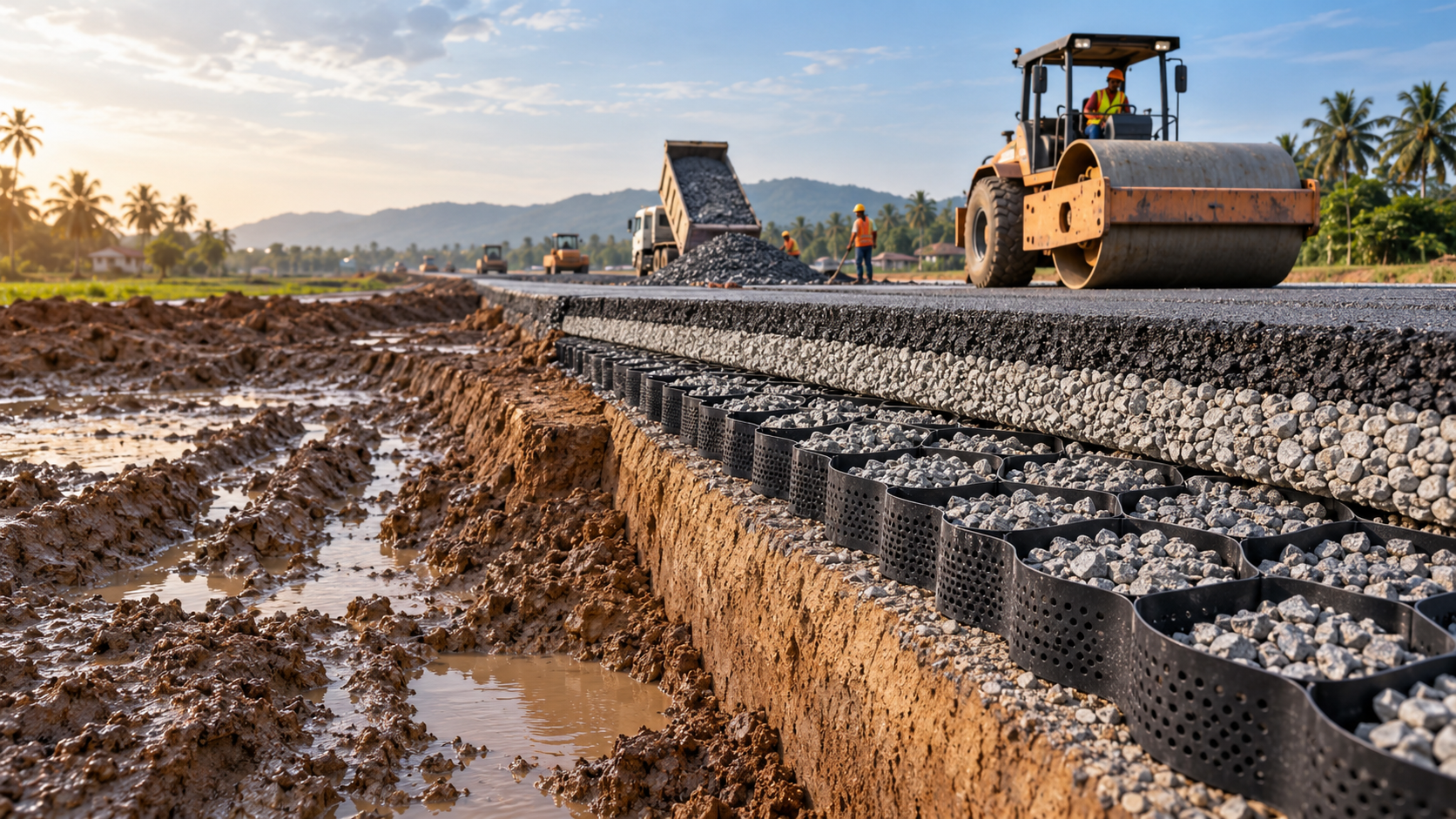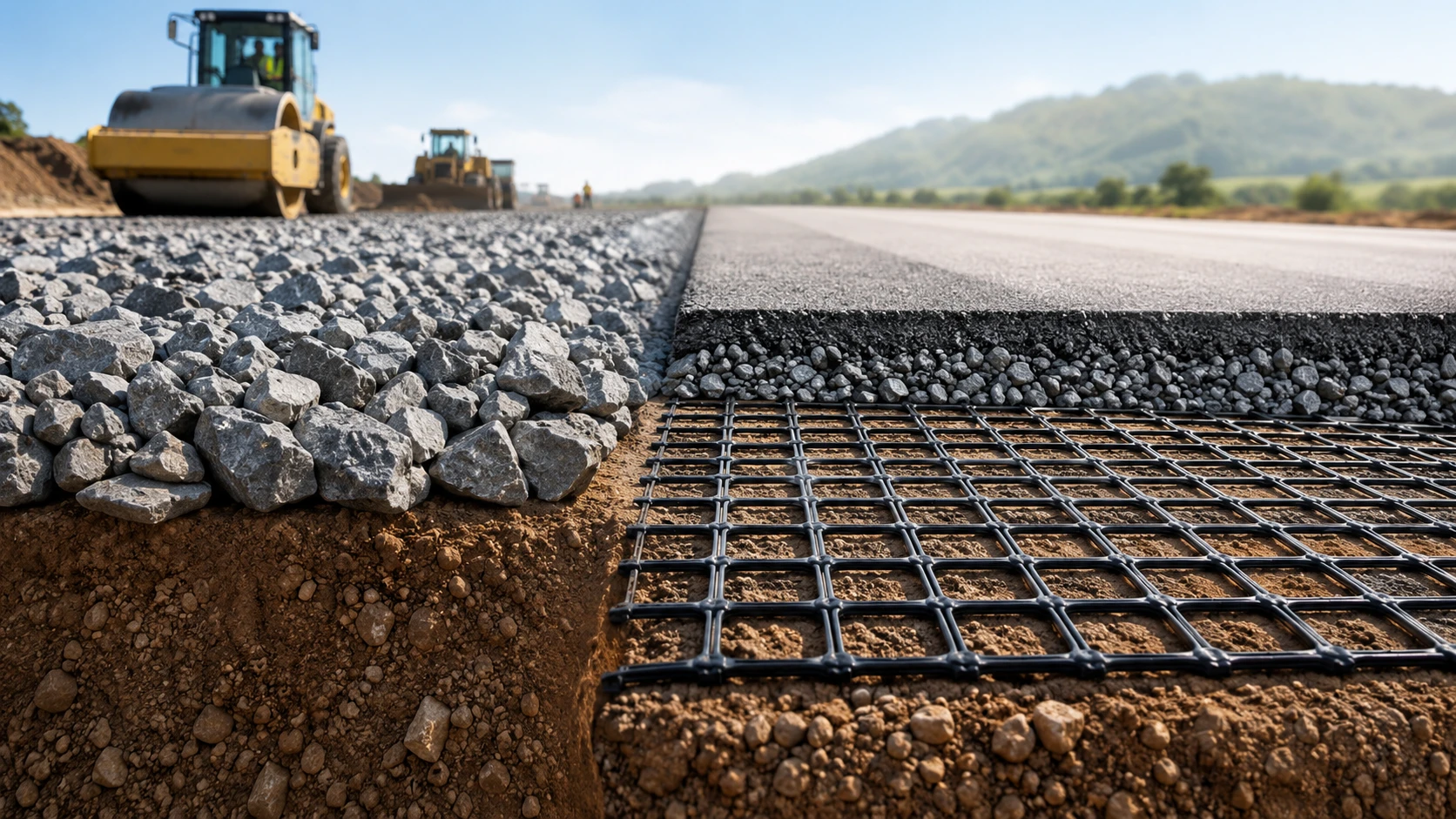
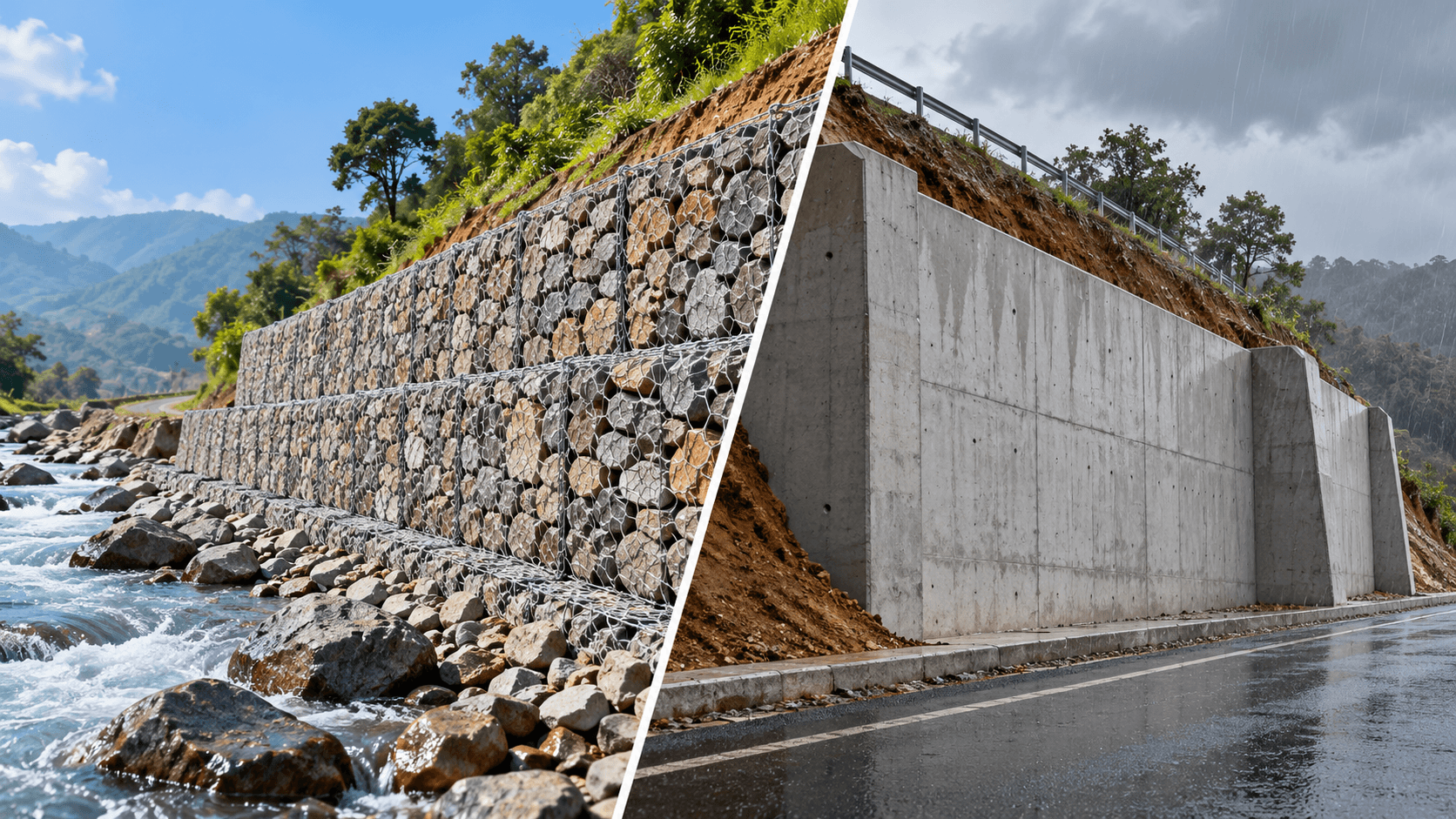
RCC is one of the most preferred choices in India, especially while constructing retaining walls. This method is not only known to engineers but also to contractors. There are some locations where this process can become costly, especially when the drainage is poor. Before you choose the type of retaining wall for your future construction, you might consider gabion boxes. Gabion boxes for retaining walls are available from Satyam Buildtech.
Comparison Between the Walls
An RCC wall functions as a cantilever retaining wall. It uses the concrete stem and its base to hold back the soil.
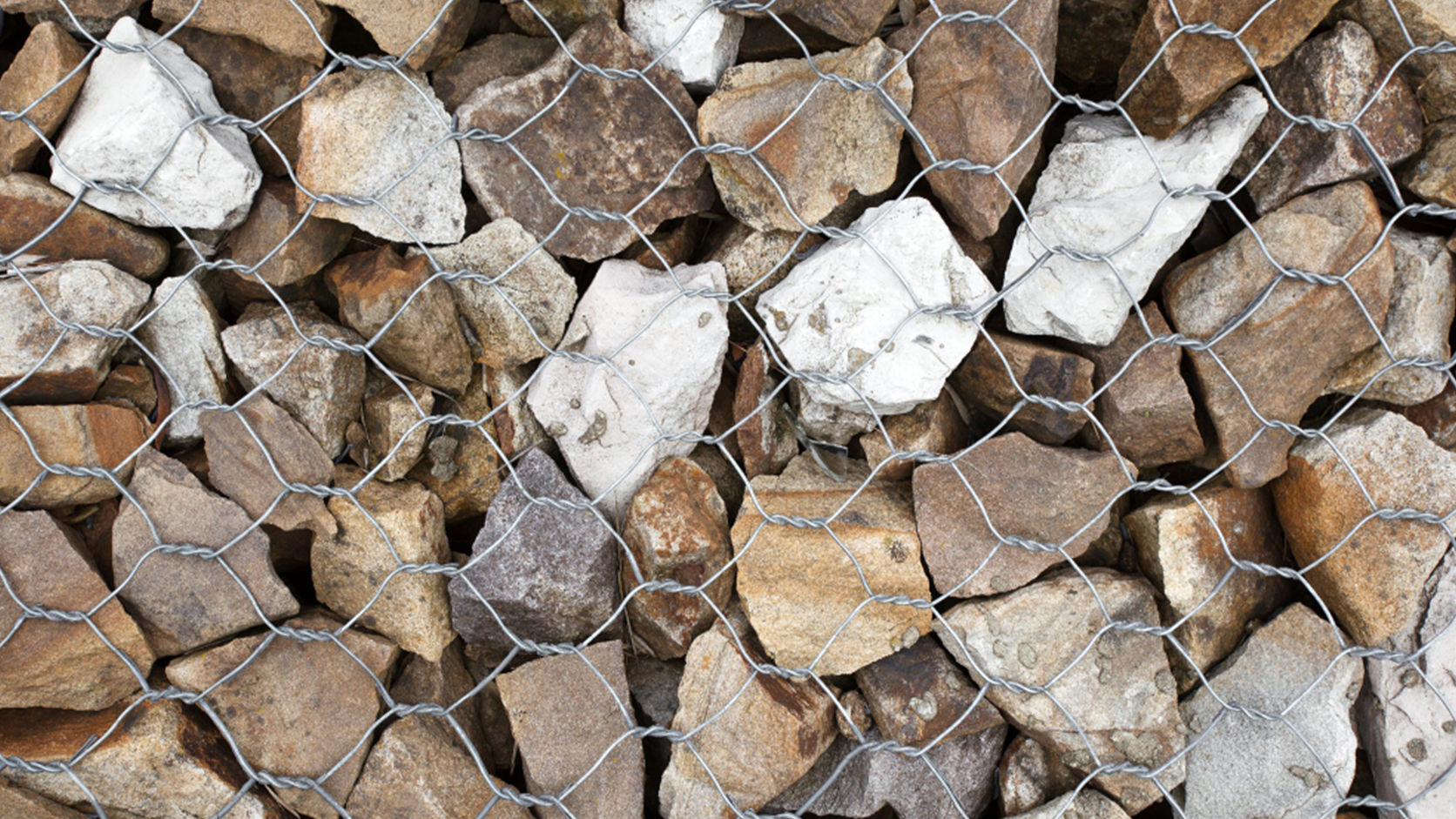
A gabion wall, on the other hand, is a gravity structure made of wire mesh baskets filled with stone. These gabion boxes resist earth pressure through their weight, and because water passes freely through the fill, the whole wall behaves as one flexible, permeable unit.
Why Drainage Makes All the Difference
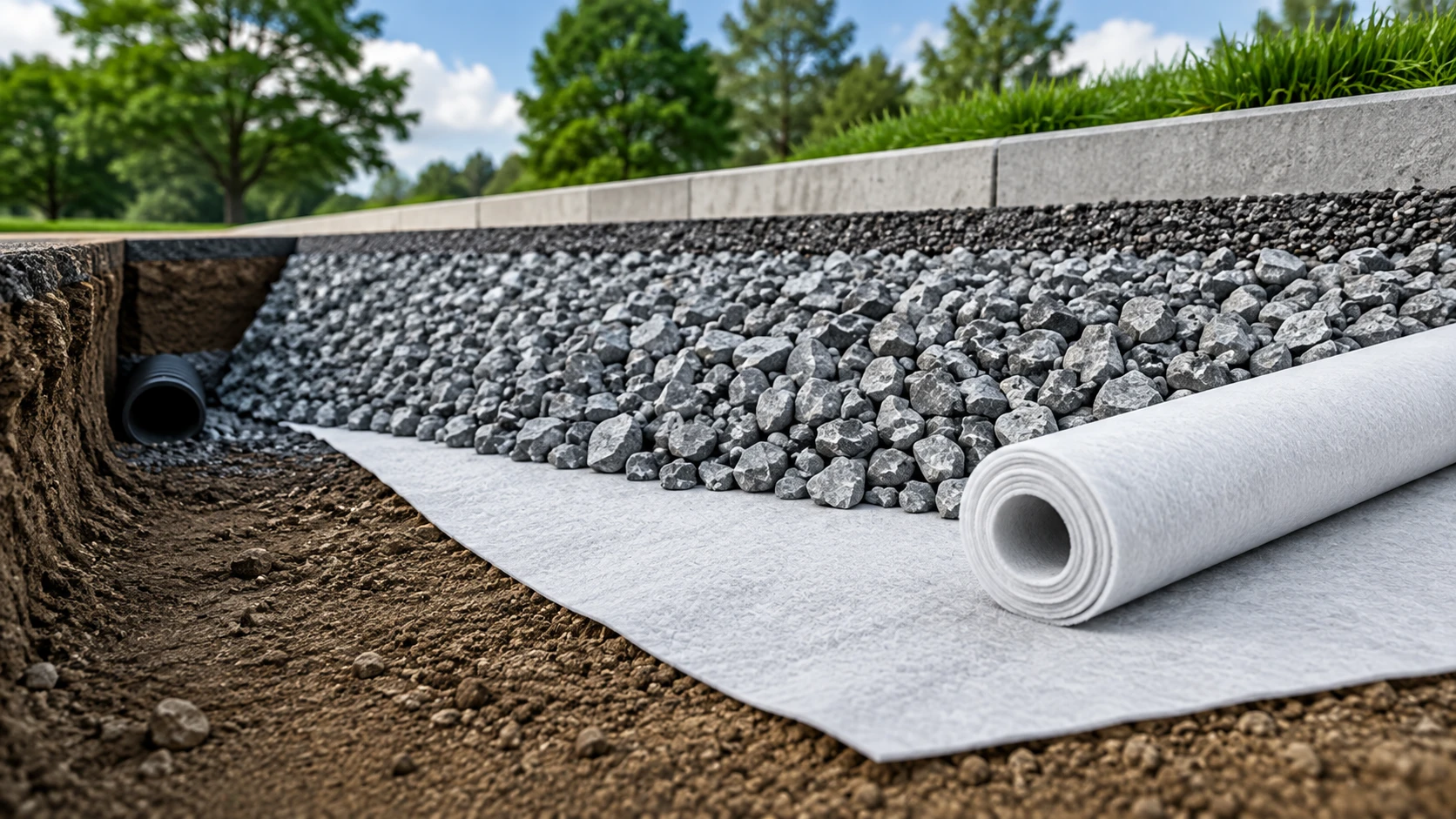
Poor drainage is a prevalent cause of retaining wall failure. During rainy seasons, the backfill gets saturated, leading to the buildup of hydrostatic pressure on the rear side of the wall. In RCC walls, drainage features like weep holes help in draining the water, but they get blocked by silt, and therefore cracks form in the wall.
In gabion walls, the drainage issue is not encountered much. This is because the water flows through the rock fill in the wall throughout its face, and hence hydrostatic pressure does not build up much inside the wall. That is why gabion boxes are extensively used along river banks, hill roads, and highway embankments.
Handling Settlement
RCC walls are relatively rigid and can be damaged by uneven settlement. If one section sinks more than the rest, cracks may appear, and the damaged portion may need significant repairs. Gabions, however, adjust to minor ground movement and keep retaining the soil, which makes them well suited to filled ground, soft soil and sites near water, subject to proper foundation and stability checks.
Construction Time
An RCC wall needs formwork, reinforcement, skilled labour and a curing period before it reaches design strength. Gabion boxes arrive flat-packed, are assembled on site, filled with stone and laced shut. There is no concrete curing time, which can help speed up construction. Fill stone can often be sourced locally, which also reduces transport costs.
Satyam Buildtech supplies gabion boxes for infrastructure and retaining wall applications. Share your project requirements with our team to discuss suitable product specifications for your site.
Planning a retaining wall in a high-rainfall area?
Tell us your wall height, soil type and site location, and our team will suggest the right basket size, mesh opening, wire diameter and coating.
Request a specification review
Comparing the Real Cost
With RCC, the true cost includes formwork, reinforcement, curing time, drainage arrangements, plastering and future crack repairs. With gabion boxes, it mainly depends on the basket specification, stone source and base preparation. On slopes, embankments and sites with local stone, gabions can work out more economically. Where space is limited, RCC may be the better option, as a gabion wall needs a wider base, which grows with wall height.
Satyam Buildtech can help project teams assess gabion box specifications based on their requirements, making it easier to plan procurement for project-scale orders.
Service Life Comes Down to Specification
The life of a gabion box depends on the quality of its wire and coating. Baskets should conform to the applicable requirements of IS 16014 or ASTM A975, depending on the product and project specification. Zinc-coated wire suits many environments, while PVC-coated wire may be recommended for riverbanks, coastal areas and aggressive soils, depending on the exposure conditions and underlying metallic coating. Always check standards compliance and coating type before choosing a supplier, as inadequate corrosion protection can cause early failure.
So, Which One Should You Choose?
RCC is generally the better choice when:
- Space is limited, and you need a narrow, vertical wall.
- The wall is part of a building or basement.
- Heavy loads sit directly behind the wall and require a suitably designed rigid structure.
Gabion boxes are generally the better choice when:
- The site sees heavy rain or poor drainage.
- The ground is soft, filled or likely to experience minor settlement.
- The project is on a slope, riverbank, highway or remote site.
- Quick construction and local stone matter.
Many projects benefit from using both: RCC where rigidity is essential, and gabions where drainage and flexibility are critical.
About Satyam Buildtech
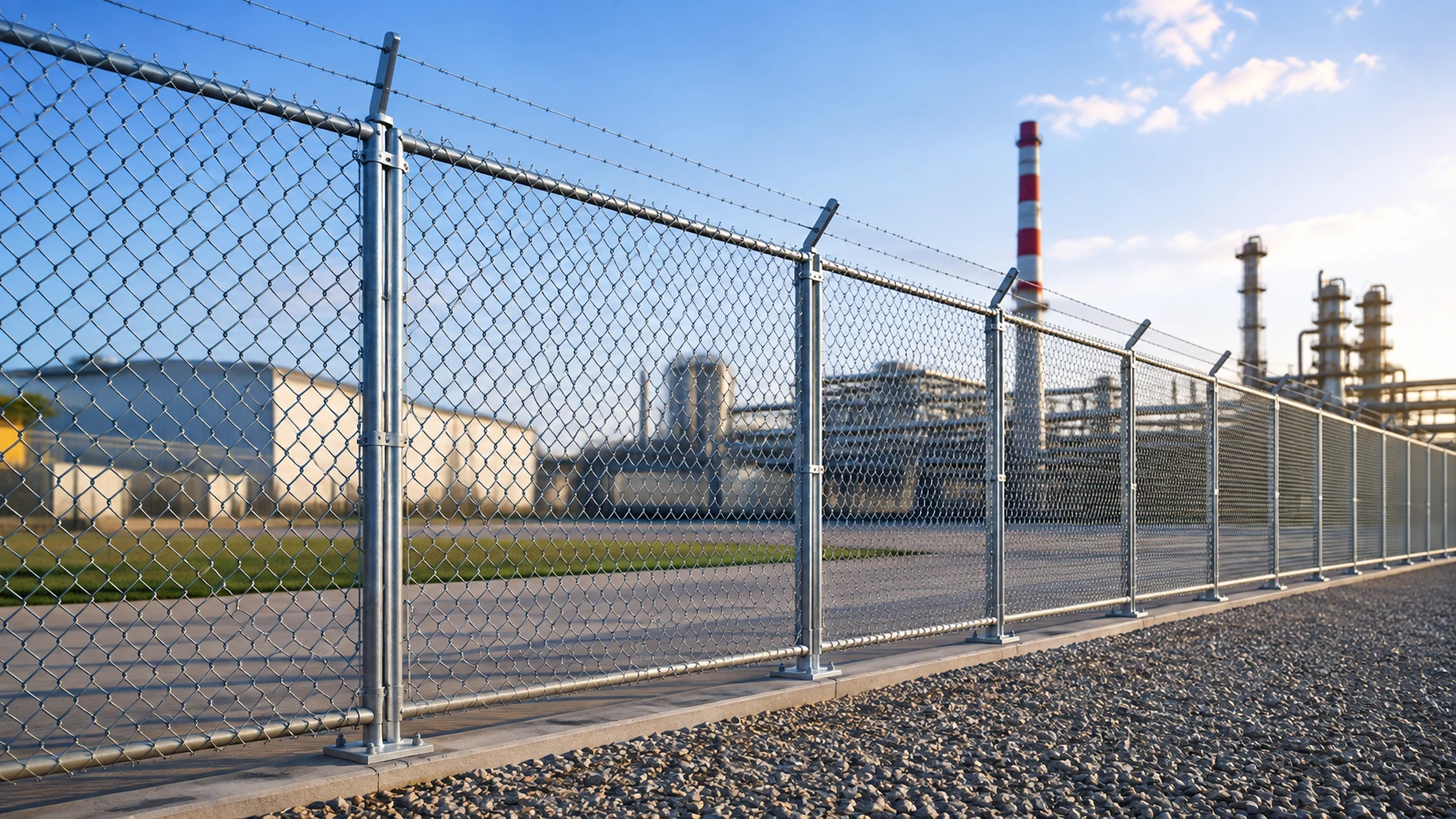
Satyam Buildtech has been manufacturing gabion boxes, wire mesh, and fencing products in Mehsana, Gujarat since 2007, from a 4,00,000 sq. ft. facility with in-house wire drawing and powder coating. With a monthly capacity of 1,000 MT, we support project-scale requirements. Strength you can build on.
Looking for the Right Gabion Box for Your Project?
Satyam Buildtech manufactures gabion boxes for infrastructure and retaining wall applications. Share your BOQ or drawings with our team to discuss product specifications and receive a detailed quote. Drop in a message to us or request a quote.