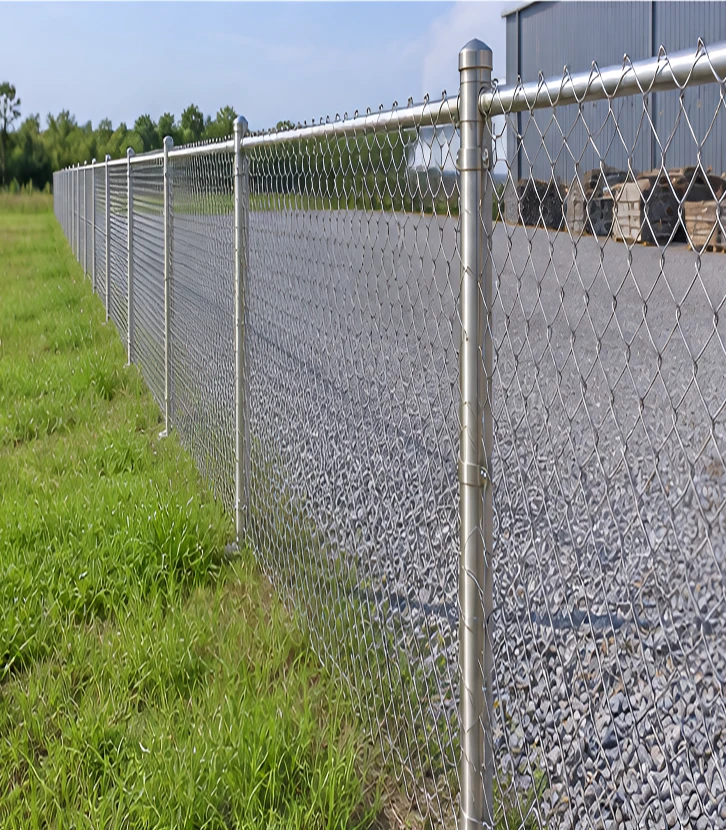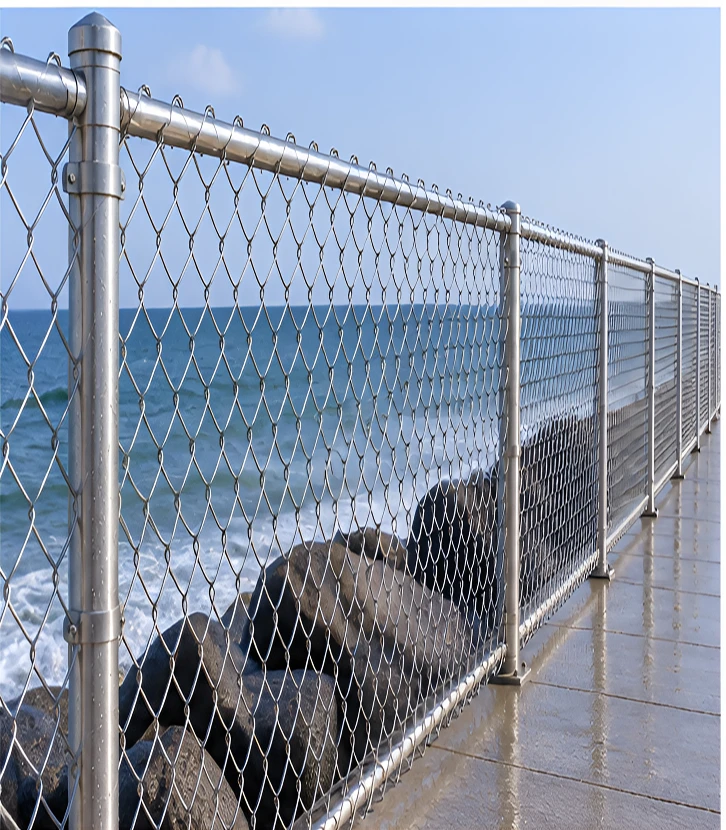
Galvanised wire fencing, the standard for boundaries across India.
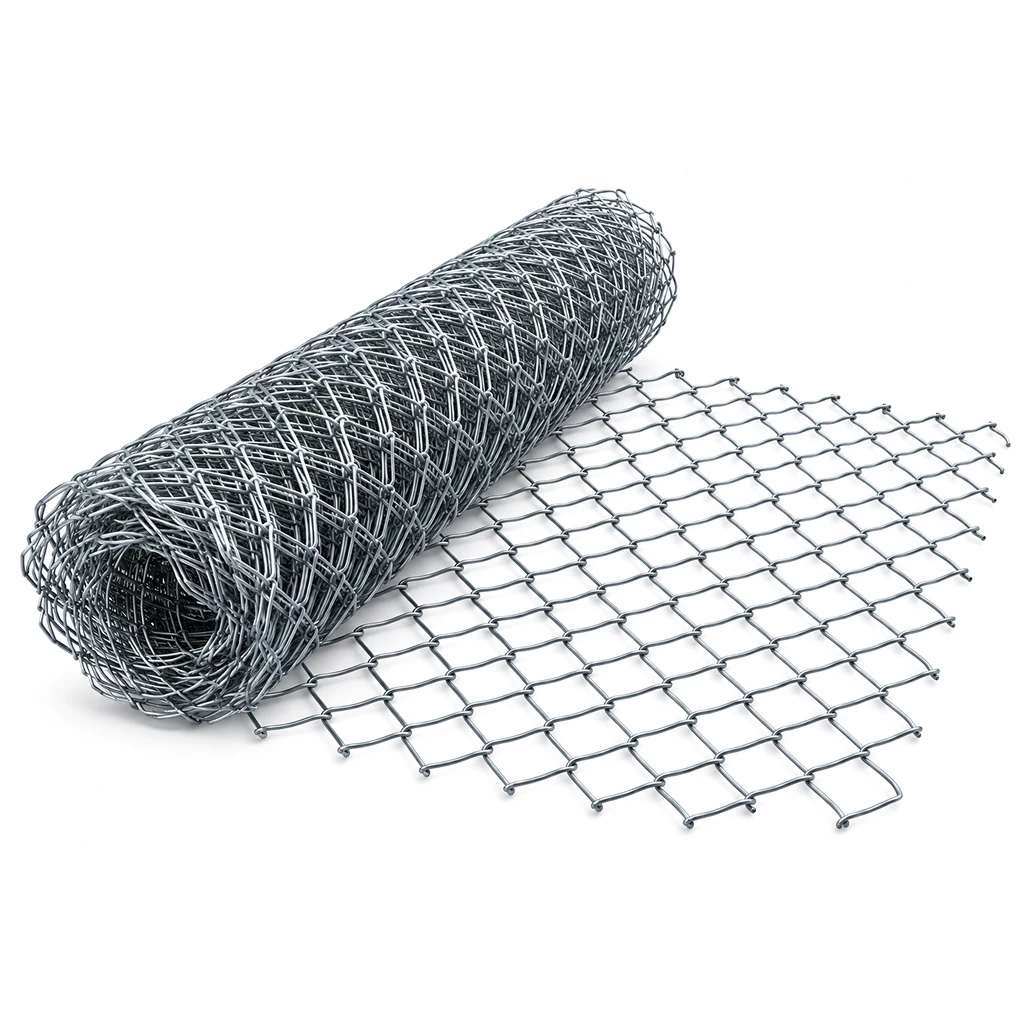
GI chain link is woven diamond mesh, drawn from mild steel wire and hot-dip galvanised before weaving. The zinc coating bonds to the wire itself, so the fence resists rust for years with no repainting or upkeep. It is the most commonly specified fencing for boundaries that need to go up fast and hold a line over long distances, at a cost lower than PVC-coated or stainless steel wire.
Manufactured in-house by Satyam from wire drawn to a consistent gauge and galvanised for even coverage, GI chain link is supplied in a range of heights and mesh sizes to suit a wide range of project requirements, and trusted across India.
A perimeter has different jobs along its length, from marking a boundary to stopping a determined intruder.
Across rural and irrigation infrastructure, canals lose water and ground to erosion while farmland needs durable, economical boundaries.
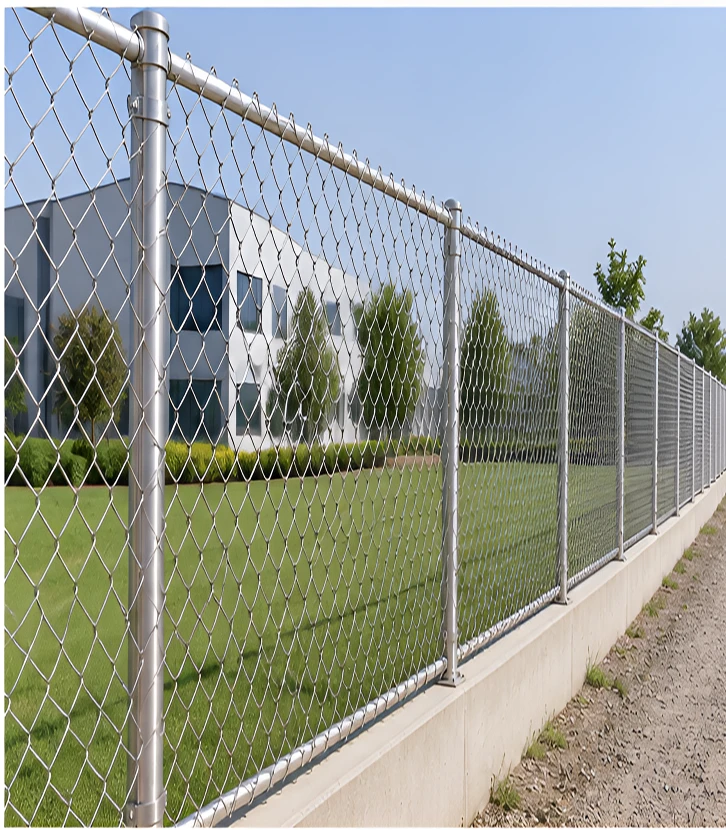
GI chain link fencing provides a defined physical barrier around a property while keeping the area visible from outside. This makes it suitable for industrial premises, infrastructure sites, agricultural land, and commercial properties where perimeter demarcation is required.
Yes. Chain link fencing can be installed across sites with slopes or changes in ground level. The supporting posts and installation arrangement need to be adjusted to follow the site profile and maintain proper fence tension.
Yes. It can be used for temporary fencing around construction sites, storage areas, project sites, and restricted zones. The installation method can be planned according to whether the fence is required temporarily or as a permanent boundary.
Yes. Its open mesh structure allows visibility through the fence while still creating a physical boundary. This can be useful for sites where security and visual monitoring are both required.
Yes. GI chain link fencing can be used for roads, railway premises, utility facilities, industrial projects, and other infrastructure applications where large perimeter areas need to be enclosed.
Yes. A damaged section can generally be repaired or replaced without removing the entire fence. The repair approach depends on the extent of damage and how the fencing has been installed.
Installation generally involves setting the supporting posts, fixing the chain-link mesh to the posts, and securing and tensioning the mesh along the fence line. The exact installation method depends on the site and fence configuration.
Yes. It is suitable for enclosing factories, warehouses, yards, equipment areas, and other open industrial spaces where a defined perimeter is required without completely blocking visibility.
Yes. It can be used for suitable roadside and highway fencing applications, particularly where a physical boundary is required along open stretches. The fence arrangement should be designed according to the project conditions and applicable requirements.
Yes. Chain link fencing can be used for animal enclosures, farms, and agricultural areas. The fencing configuration should be selected according to the type and size of animals being contained.
FAQ Content