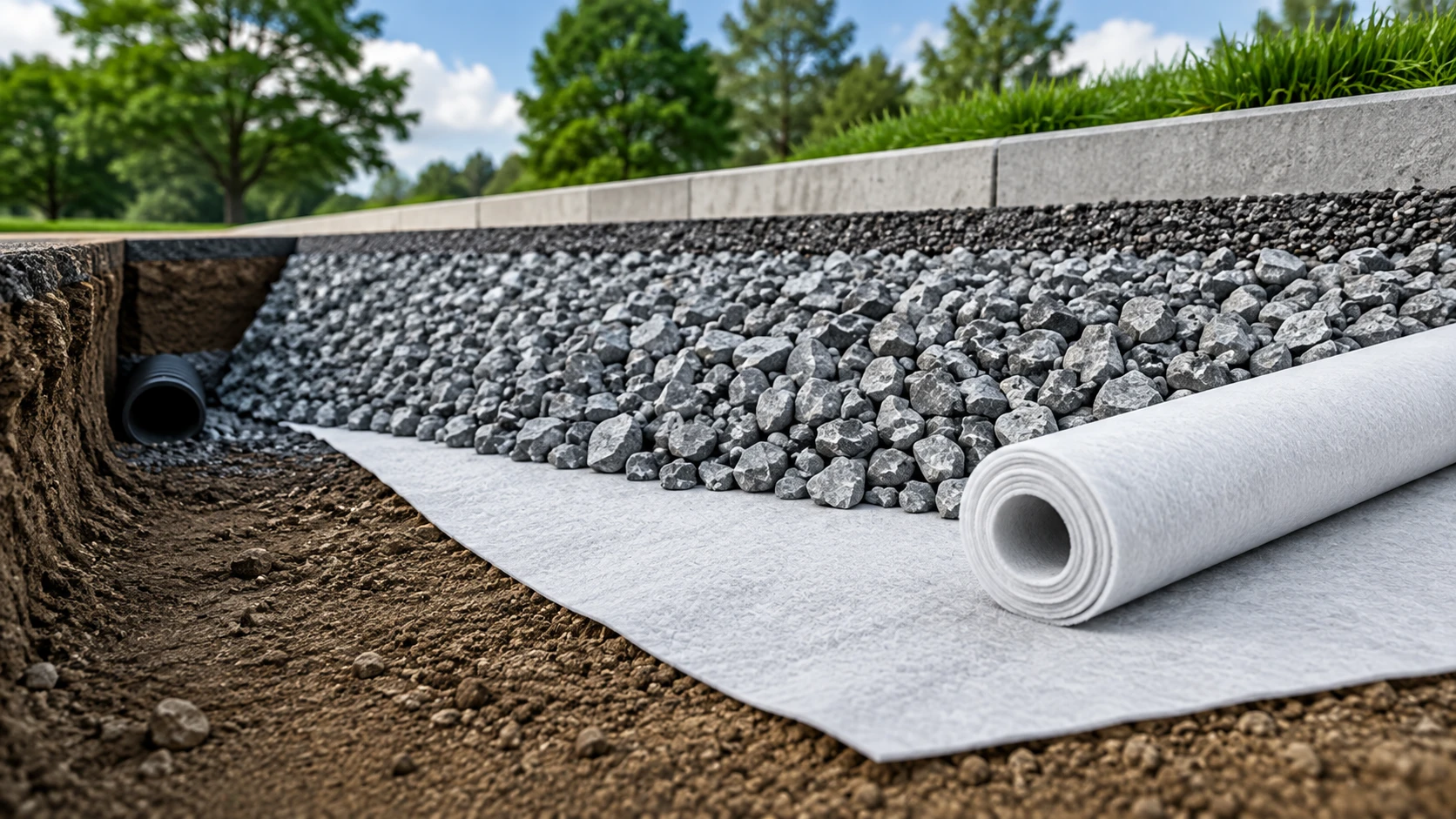
Beneath most well-built roads, drainage systems, and embankments is a layer most people never see: a non-woven geotextile. It doesn’t carry structural load the way a geogrid does, but its job is just as critical, keeping different layers of soil and aggregate from mixing, letting water pass through while holding fine particles back, and quietly extending the service life of everything built above it.
For engineers and contractors specifying drainage, road, or embankment works, understanding what non-woven geotextiles actually do, and how to specify them correctly, prevents problems that are expensive to fix once construction is complete.
What Is a Non-Woven Geotextile?
Non-woven geotextiles are made from synthetic fibers, typically polypropylene or polyester, bonded together through needle-punching or heat-bonding rather than woven into a grid pattern. This manufacturing process gives the material a felt-like structure with countless small, randomly distributed pores, which is what makes it effective at filtration while still allowing water to pass through.
This is the key distinction from woven geotextiles, which are made from interlaced yarns and are generally chosen for higher tensile strength applications rather than filtration performance.
The Three Core Functions
Separation
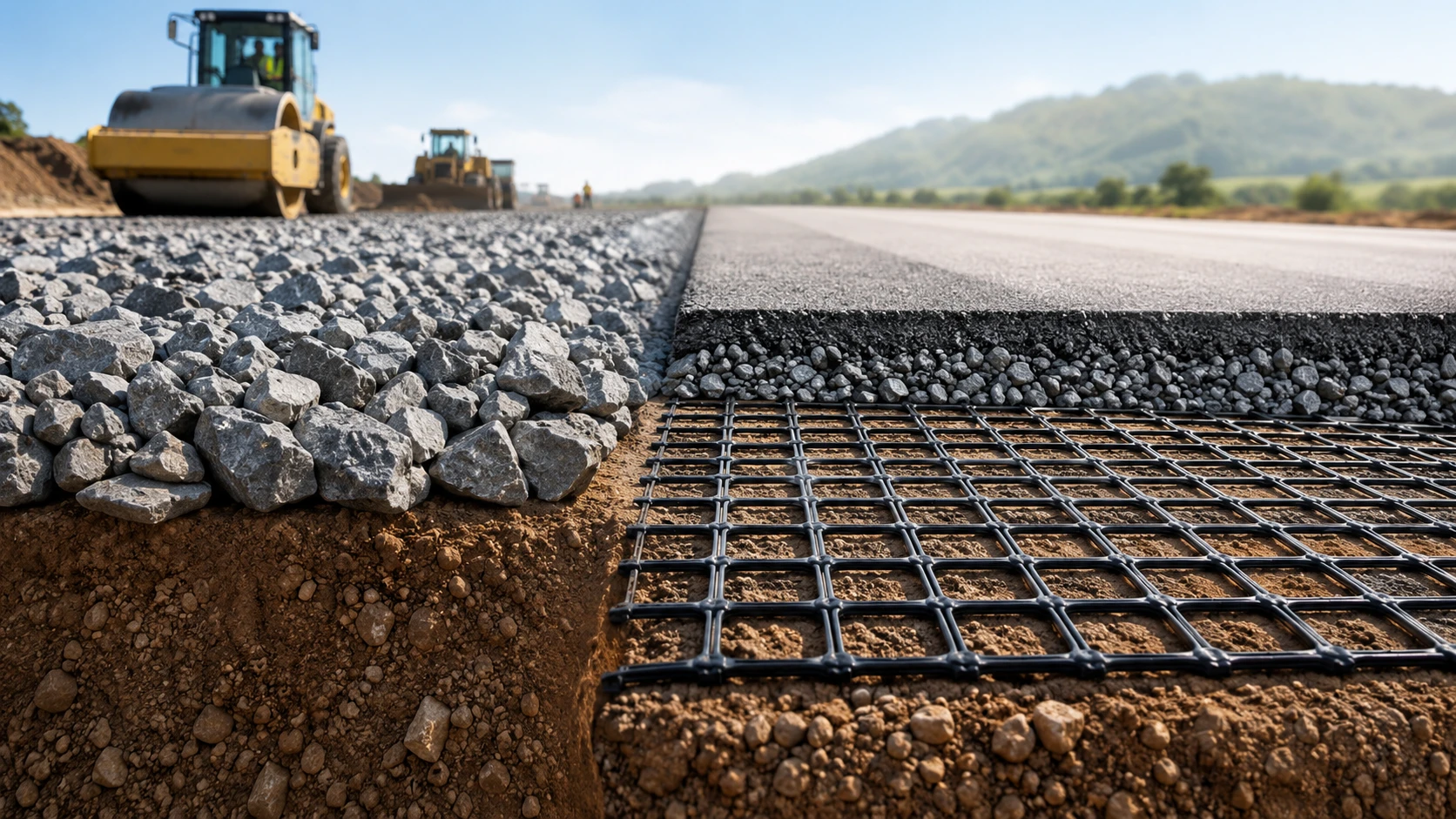
When two different soil or aggregate layers sit directly on top of each other, for example, a granular sub-base over soft clay subgrade, traffic loading and water movement gradually cause the layers to mix. Once fine subgrade soil migrates up into the aggregate layer, the load-bearing capacity of that aggregate drops sharply, leading to rutting and pavement failure. A non-woven geotextile placed between the layers acts as a permeable barrier, keeping the aggregate structurally intact while still allowing water to move through.
Filtration
In drainage applications, water needs to move freely while the soil particles it carries are held back. Non-woven geotextiles are engineered with a pore size small enough to retain fine soil particles but large enough to avoid clogging under normal flow conditions. This filtration function is essential in drainage trenches, retaining wall backfill, and any application where water is expected to move through soil without carrying it along.
Drainage Support
While the geotextile itself isn’t a drainage layer, it protects drainage aggregate and pipe systems from silting up over time. Without this protective layer, fine soil particles gradually infiltrate and clog drainage stone or perforated pipe, reducing system performance until the drain effectively stops working, often years before it was designed to.
Where Non-Woven Geotextiles Are Used
- Road and highway construction — separation between subgrade and sub-base layers
- Railway trackbeds — separation and filtration beneath ballast
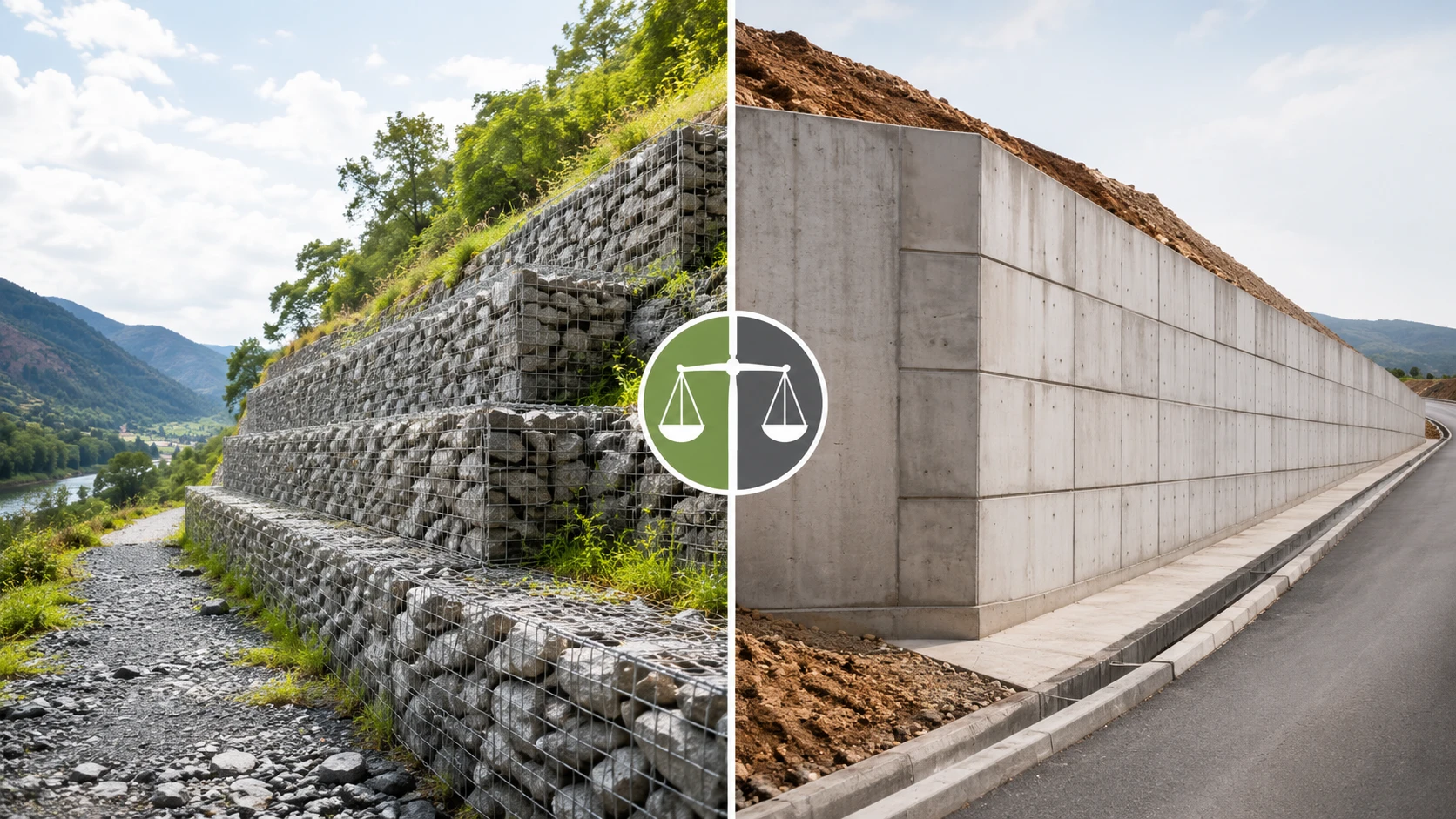
- Retaining wall and gabion structures — filtration layer behind backfill to prevent soil migration
- Drainage systems — filter wrap around perforated pipe and drainage aggregate
- Landfill and containment projects — separation and protection layers
- Erosion control and canal works — filtration alongside slope stabilization structures
Discuss your project requirements?
What to Check Before Specifying
Grammage (GSM)
Non-woven geotextiles are typically specified by weight per square meter (GSM), which correlates with thickness, puncture resistance, and filtration performance. Lighter GSM products (100–150 GSM) suit lower-stress separation applications, while heavier grades (200 GSM and above) are used where higher puncture resistance or more demanding filtration performance is required. Under-specifying GSM for the application is one of the most common causes of premature geotextile failure.
Permittivity and Pore Size
These two properties directly determine filtration performance: permittivity measures how easily water passes through, and apparent opening size (AOS) determines what particle size is retained. A geotextile with a mismatch between these properties and the soil gradation on site will either clog prematurely or allow excessive fines to pass through.
UV Stabilization
Geotextiles are frequently exposed to sunlight during installation before being covered by aggregate or fill. UV-stabilized material resists degradation during this exposure window; unstabilized material can lose strength before it’s ever put under load.
Puncture and Tear Resistance
During installation, geotextiles are exposed to sharp aggregate edges, construction equipment, and foot traffic. Adequate puncture and tear resistance, driven largely by fiber bonding quality and GSM, determines whether the material survives installation intact.
Why Manufacturing Consistency Matters
Two geotextile rolls with the same GSM rating can still perform differently if fiber bonding is inconsistent across the batch. Uneven bonding creates localized weak points, areas where the material is more prone to puncture or premature clogging, that don’t show up until the material is already in the ground and under load.
At Satyam Buildtech, non-woven geotextiles are manufactured and tested within our integrated facility in Mehsana, with every batch verified in-house and backed by a material test certificate before dispatch. That gives engineers a documented basis for specification rather than relying on assumed consistency across rolls.
An Unseen Layer With an Outsized Impact
Non-woven geotextiles rarely get the attention that visible structural elements do, but their role in separation, filtration, and drainage protection directly affects how long a road, embankment, or drainage system performs before it needs remedial work. Getting the specification right at the design stage is far cheaper than correcting a drainage or pavement failure after construction.