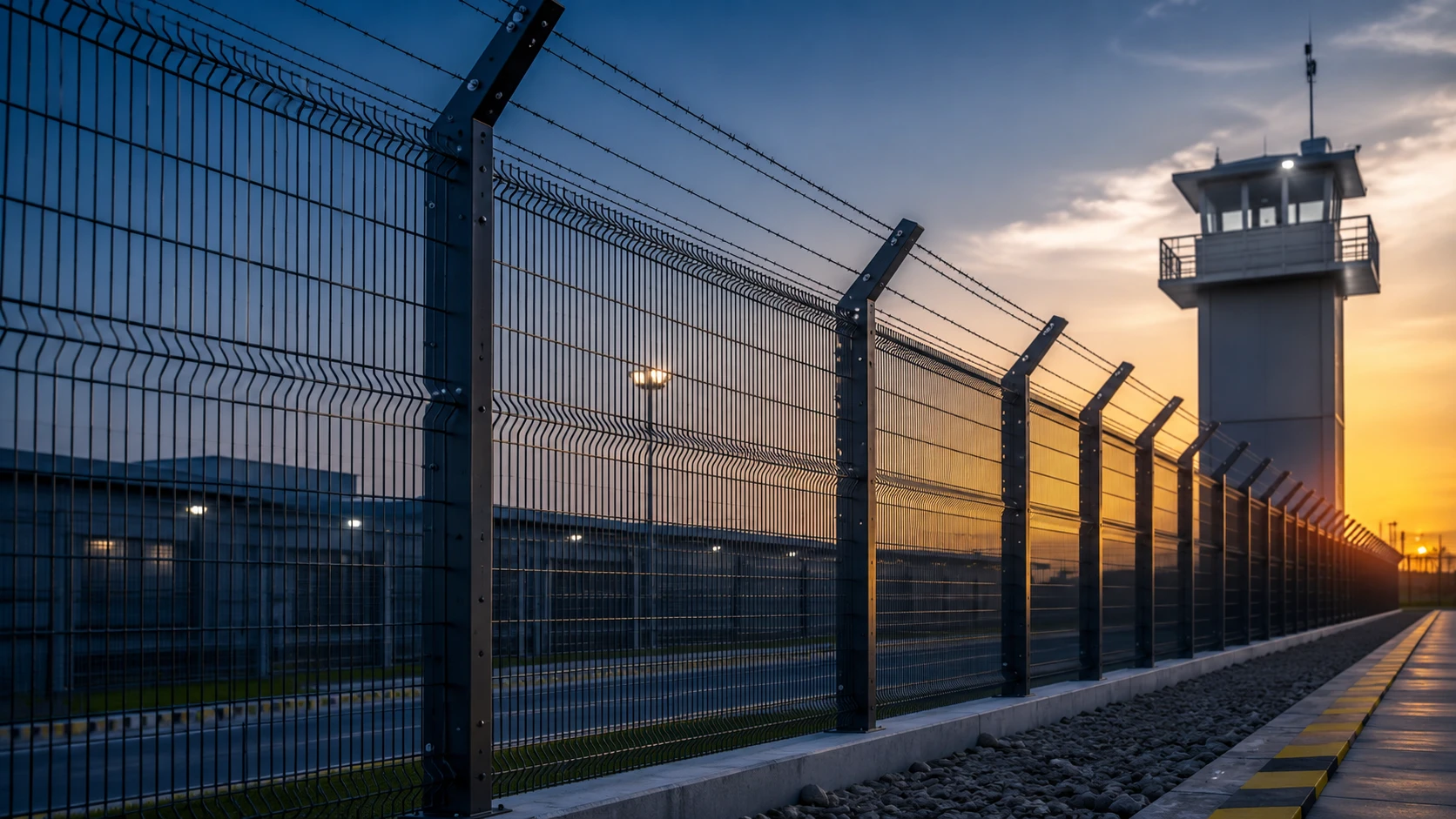
When a perimeter needs to do more than mark a boundary, when it needs to actively deter intrusion, standard chain link fencing isn’t enough. This is where 358 anti-climb fencing, also known as prison mesh or high-security welded mesh, comes in. It’s the standard specified on airports, power stations, correctional facilities, border installations, and other sites where a breach carries serious consequences.
Here’s what makes 358 mesh different, and how to think about specifying it correctly.
What Is 358 Anti-Climb Fencing?
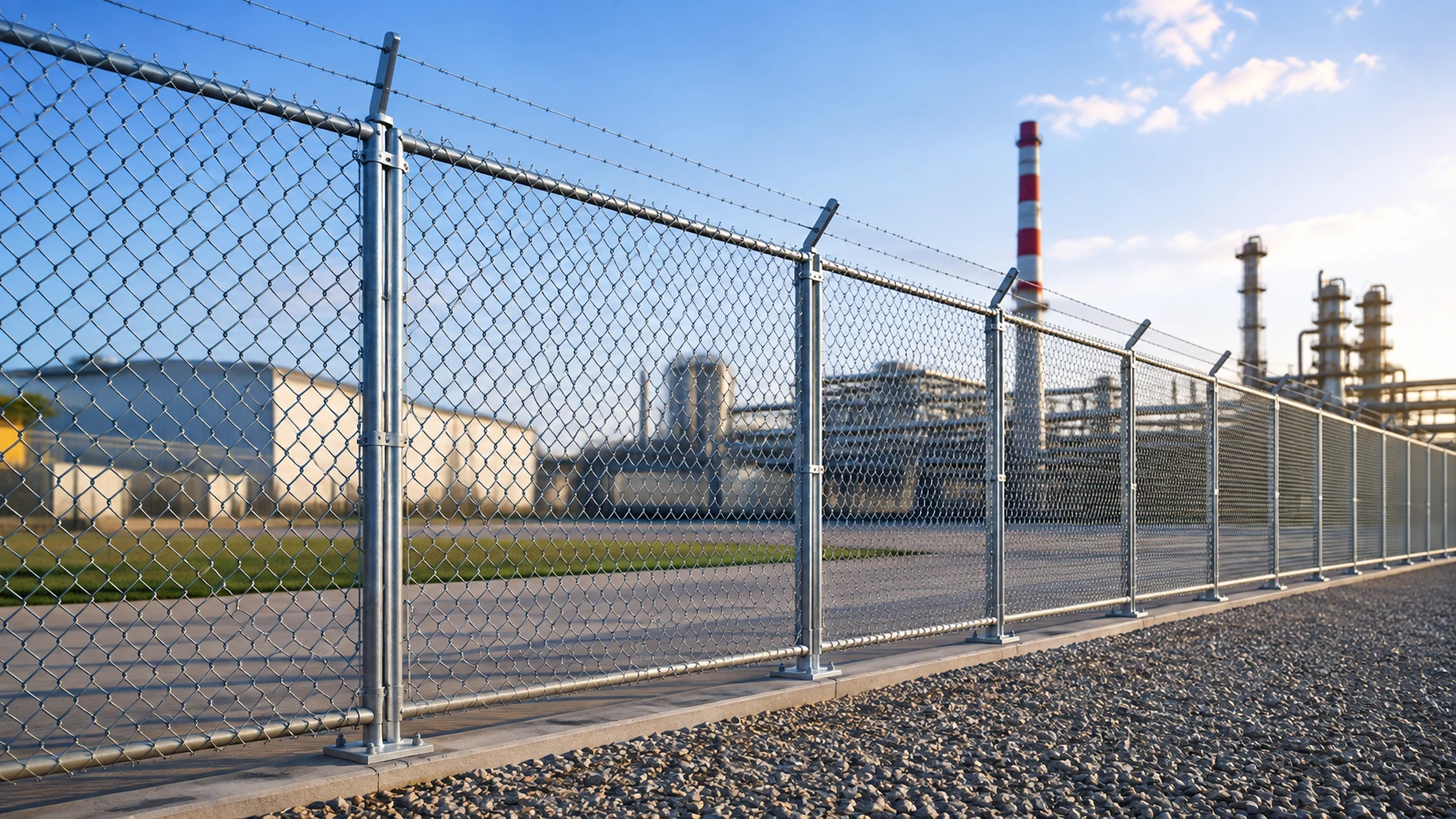
The name “358” refers to the mesh aperture: 76.2mm x 12.7mm, small enough that a boot toe or gloved finger cannot get purchase on the mesh, and thick enough (typically 4mm to 6mm wire gauge) to resist cutting with standard hand tools. The tight, rectangular pattern is welded at every intersection, not woven, which means the mesh holds its shape under load and doesn’t distort or sag over time the way chain link can.
This combination of small aperture and high wire gauge is what separates true 358 mesh from lower-security welded panels that merely look similar.
Why Standard Fencing Falls Short
Chain link and standard welded mesh fencing serve their purpose for general perimeter marking and low-risk sites. But their larger apertures give intruders enough grip to climb, and thinner gauge wire can be cut quickly with bolt croppers. For sites where the fence line is the primary line of defense, rather than a secondary deterrent, that gap in performance matters.
358 mesh addresses both failure points directly. The small aperture removes climbable footholds, and the higher tensile wire resists common cutting tools long enough to trigger a security response.
Where 358 Mesh Is Typically Specified
- Airports and ports — perimeter security around restricted operational zones
- Power stations and substations — critical infrastructure protection
- Correctional facilities — where climb and cut resistance is a baseline requirement
- Border and defense installations — high-threat perimeter lines
- Data centers and industrial plants — asset protection for high-value sites
- Public infrastructure — rail yards, water treatment plants, and government buildings
Key Specification Factors
Wire Gauge and Tensile Strength
Not all 358 mesh is manufactured to the same tensile standard. Higher tensile wire increases cut resistance without adding significant weight, which matters for both material cost and post installation. Specifiers should ask for tensile strength figures, not just wire diameter, when comparing suppliers.
Coating and Corrosion Resistance
High-security fencing is a long-term asset, often installed in exposed, unmonitored locations where maintenance access is limited. Galvanized coating, followed by a polyester powder coat, is the standard combination for protecting against corrosion in India’s varied climate, from coastal humidity to industrial pollution. A fence that rusts at the welds loses structural integrity long before it looks visibly worn.
Panel Height and Post Spacing
358 mesh is typically supplied in panel heights ranging from 2.4m to 4.5m or higher, depending on threat level. Post spacing and foundation depth need to match the panel height and expected load, including wind load in open or coastal sites. Undersized posts are a common point of failure in otherwise well-specified fencing systems.
Anti-Cut and Anti-Climb Add-Ons
Many high-security installations pair 358 mesh with additional deterrents: barbed wire or concertina wire coils along the top, anti-dig sections at the base, or sensor integration for perimeter intrusion detection. The mesh itself is the foundation; the full system determines the actual security level achieved.
Discuss your project requirements?
Installation Considerations
Because 358 panels are rigid and pre-welded, installation is generally faster than woven mesh systems, but it still requires accurate post alignment and secure fixing brackets to prevent panels from being levered off their mounts. Poor installation is one of the most common ways a correctly specified high-security fence underperforms in practice. Working with a manufacturer that understands both the product and the installation requirements reduces this risk.
Testing and Traceability
For government, defense, and critical infrastructure projects, material test certificates and traceable raw material sourcing aren’t optional; they’re often a procurement requirement. Every batch should be verifiable back to its production run, with documented tensile and coating tests rather than assumed compliance.
Why Manufacturing Origin Matters
358 mesh quality is determined almost entirely at the production stage; wire drawing, welding consistency, and coating application all happen before the panel ever reaches site. Fencing sourced through multiple intermediaries can lose that traceability, making it harder to verify what standard the mesh was actually made to.
At Satyam Buildtech, 358 anti-climb fencing is manufactured start to finish within a single integrated facility in Mehsana, from wire drawing and welding to powder coating and in-house testing. Every batch is tested before dispatch and backed by a material test certificate, giving specifiers a documented basis for the security standard they’re procuring.
Specifying the Right Fence for the Right Risk
Not every perimeter needs 358 mesh; it’s a high-security product for high-consequence sites. But where the fence line genuinely needs to resist climbing and cutting, cutting corners on wire gauge, coating, or installation quality undermines the entire investment.