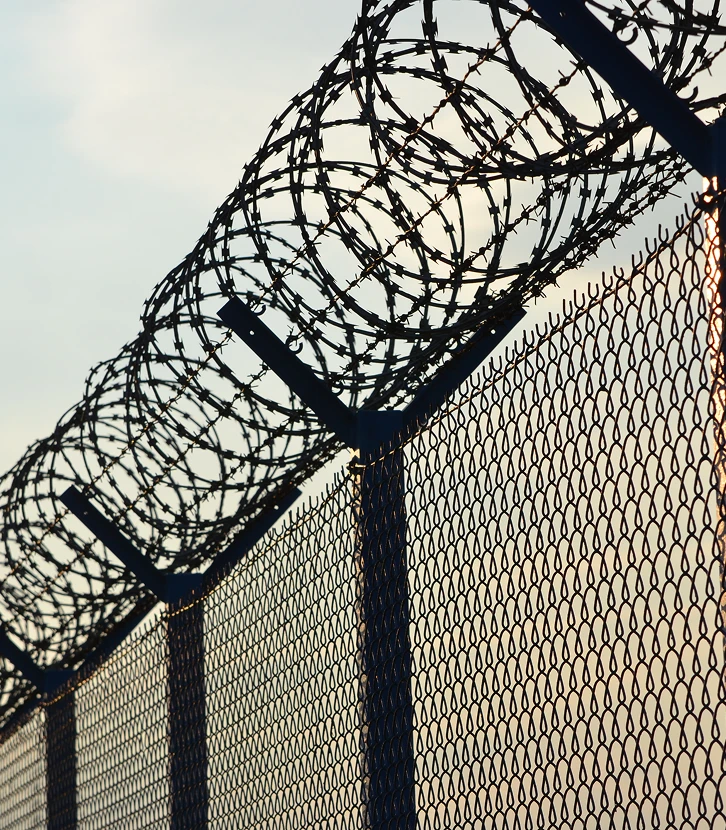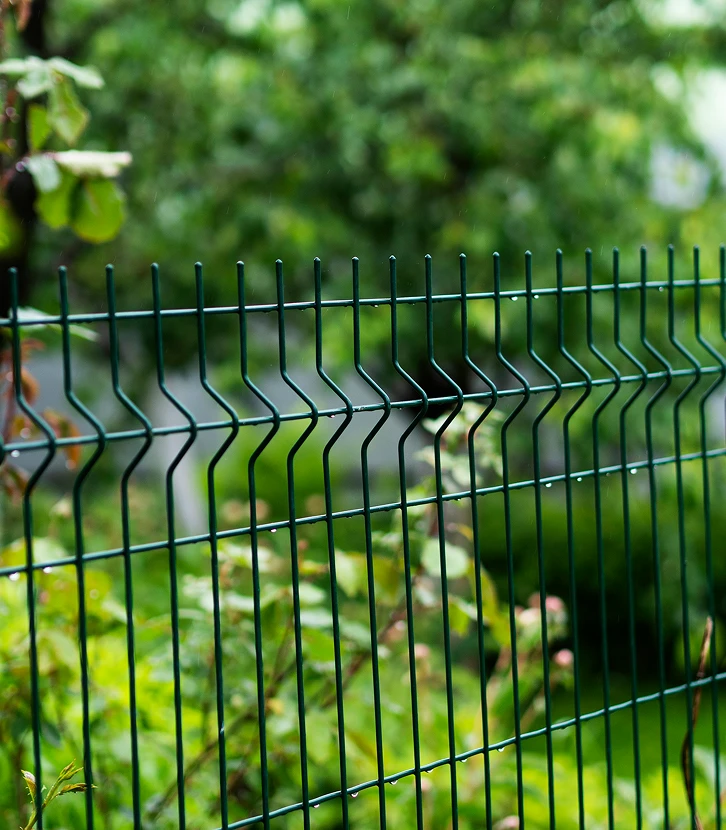
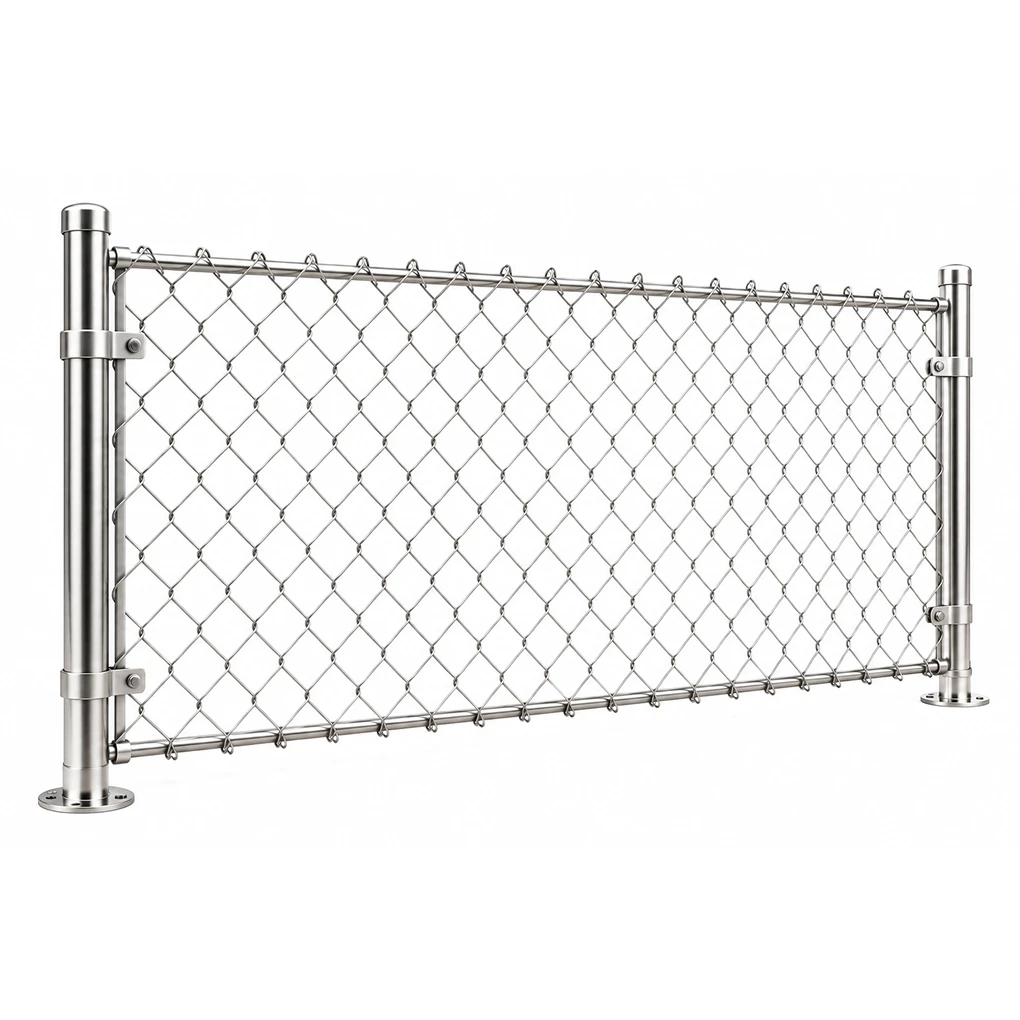
Woven boundary fencing that holds up where standard wire won’t.
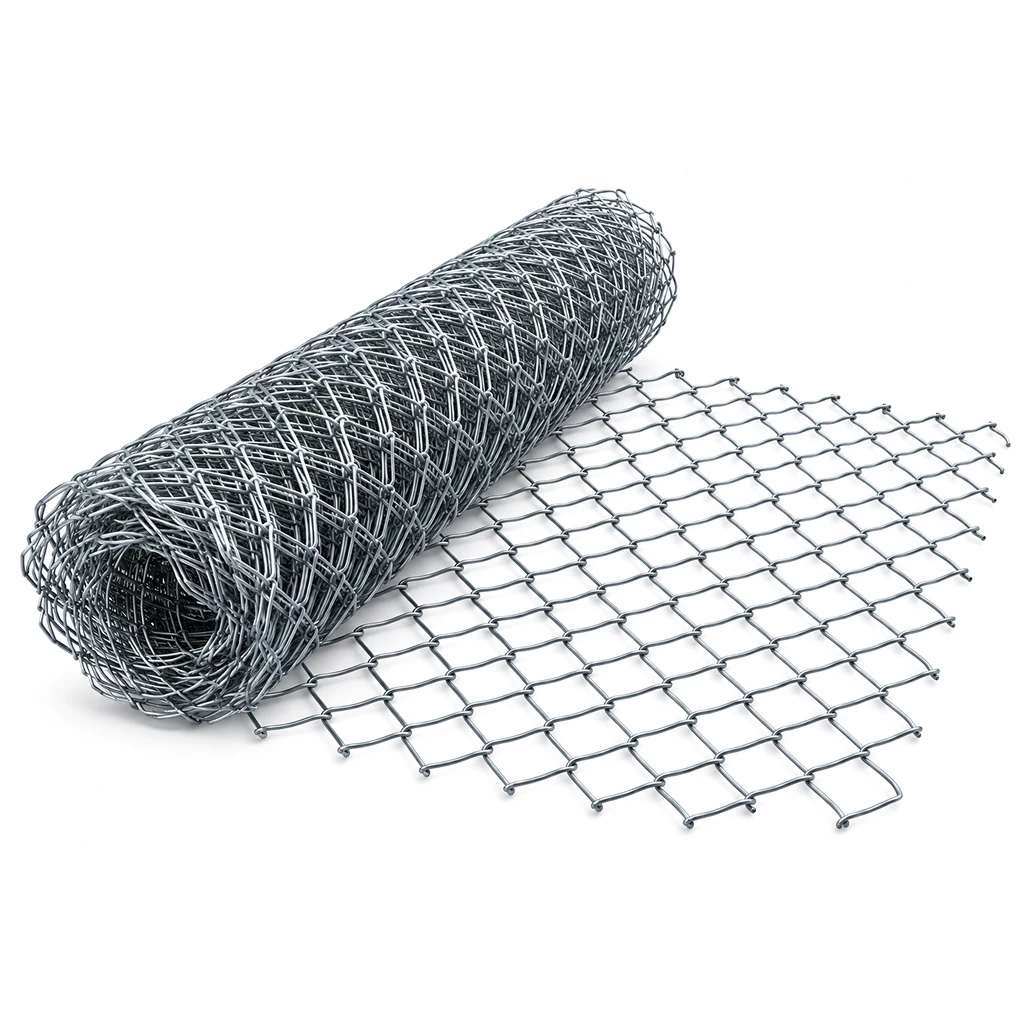
SS chain link is the same diamond-woven mesh as standard chain link, drawn from stainless steel wire instead of galvanized or PVC-coated steel. Where a coating can chip, scratch or wear through over time, stainless steel resists corrosion through the wire itself, so the fence keeps its strength and its look in conditions that would otherwise shorten a fence’s life — coastal air, industrial fumes, chemical exposure, or years of weathering with no maintenance in between. It covers long perimeters the same way standard chain link does, at low cost per metre of coverage, and adapts to uneven ground without losing line.
Manufactured in-house by Satyam from stainless steel wire drawn to a consistent gauge, SS chain link is supplied in a range of heights and mesh sizes to suit a wide range of project requirements, and trusted across India.
A perimeter has different jobs along its length, from marking a boundary to stopping a determined intruder.
Across rural and irrigation infrastructure, canals lose water and ground to erosion while farmland needs durable, economical boundaries.
Stainless steel contains alloying elements that form a passive protective layer on its surface. This inherent corrosion resistance makes stainless steel chain link fencing suitable for environments where surface coatings alone may not provide the required level of long-term protection.
Not necessarily. One of the key advantages of SS chain link fencing is that its corrosion resistance comes from the stainless-steel material itself rather than depending on an external protective coating. The required stainless-steel grade should still be selected according to the project’s environment.
Yes. Stainless steel chain link mesh can be used for water infrastructure where fencing may be exposed to moisture over extended periods. Its corrosion-resistant properties make it relevant for applications around water-related infrastructure, subject to the project’s environmental and material specifications.
Yes. Corrosion-resistant chain-link fencing is particularly relevant where the site presents challenging environmental conditions such as coastal exposure, industrial pollution, high humidity or chemical exposure. The material grade should be selected according to the severity of those conditions.
Yes. Satyam Buildtech manufactures SS chain link fencing in-house, using stainless steel wire drawn to a consistent gauge. The product is available in different heights and mesh sizes to accommodate varying project requirements.
A purchase order should clearly mention the stainless steel grade, wire diameter, mesh opening, fence height, roll dimensions, quantity and applicable quality requirements. This prevents ambiguity between the required material specification and the finished product.
For projects exposed to demanding environmental conditions, selecting a corrosion-resistant material can reduce dependence on external protective coatings and help maintain the fencing’s performance over its intended service period. The benefit depends on choosing the correct stainless steel grade and specification for the site.
Satyam Buildtech controls key manufacturing parameters, including wire gauge and mesh formation, within its production process. This helps maintain dimensional consistency across the supplied chain-link fencing.
Yes. Satyam Buildtech offers SS chain link fencing for applications where corrosion resistance is an important project consideration, including ports, coastal infrastructure and other demanding outdoor environments.
Yes. Different mesh configurations can be supplied to suit project requirements. The required mesh opening should be specified based on the intended security, containment and visibility requirements.
Yes. For customers with recurring or phased project requirements, specifications can be established in advance so subsequent orders can be aligned with the approved product configuration
FAQ Content